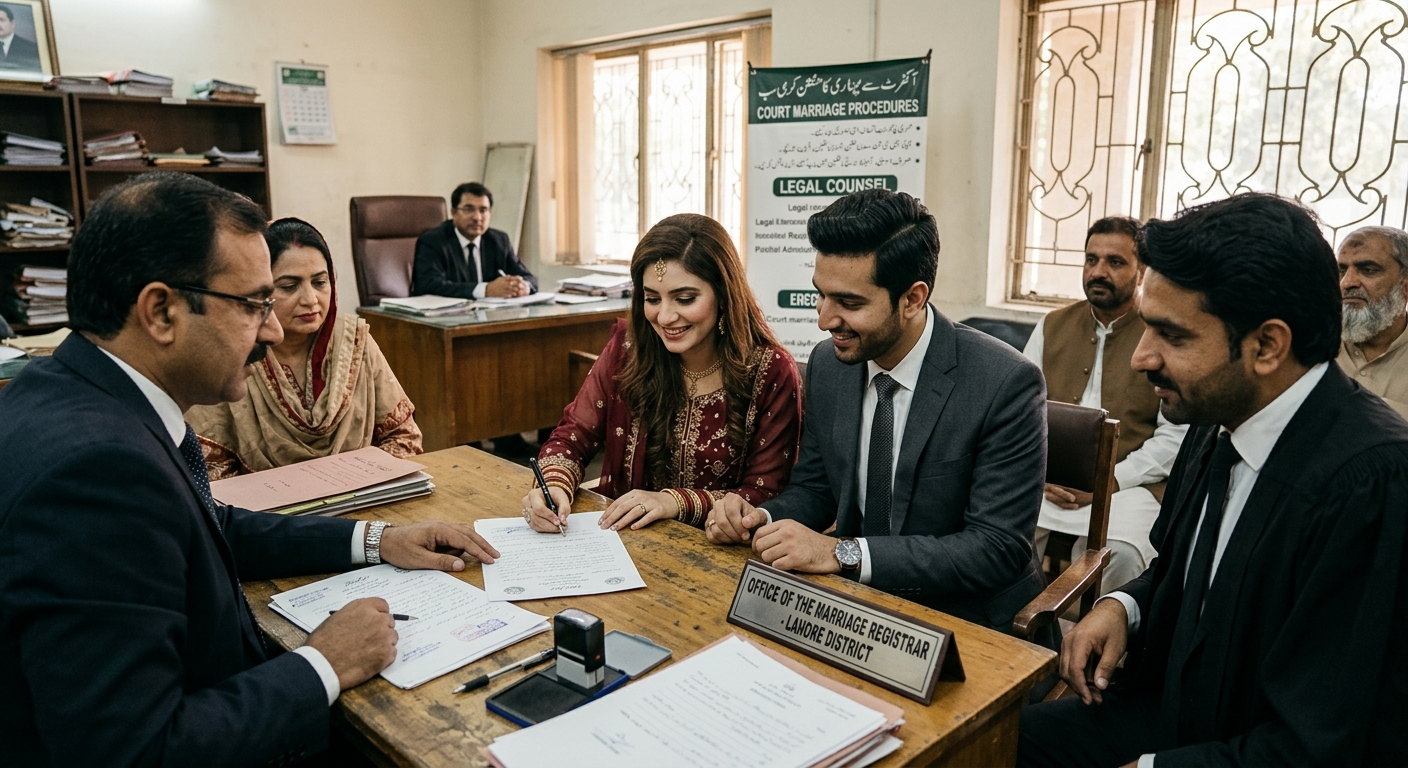
Court marriage in Pakistan is a legally recognized, structured, and rights-based marriage process that allows two individuals to marry based on mutual consent. In recent years, awareness around this legal option has increased significantly, especially among couples seeking independence, legal clarity, and protection under the law.
Unlike traditional weddings that may involve lengthy cultural rituals, this approach focuses on legal compliance, documentation, and official registration. This makes it a practical option for couples facing family opposition, intercultural barriers, or those who prefer a straightforward and legally secure process.
In this comprehensive guide, you’ll learn:
- The complete legal procedure in Pakistan
- Step-by-step process
- Required documents and affidavits
- Cost, timeline, and legal rights
- Common challenges and practical solutions
What is Court Marriage in Pakistan?
Court marriage in Pakistan is a legally valid union conducted through a licensed Nikah registrar and registered with the relevant Union Council, ensuring full legal protection for both spouses.
Despite the term, it usually does not take place inside a courtroom. Instead, it follows a formal legal marriage framework where consent, documentation, and registration are the key elements.
Difference Between Legal and Traditional Marriage
- Traditional Nikah: Often arranged with cultural ceremonies
- Legal/registered marriage: Focuses on documentation, consent, and compliance
Both are valid if registered, but this method ensures legal clarity from the beginning.
Legal Framework Governing Marriage in Pakistan
Understanding the court marriage law in Pakistan is essential for compliance and protection.
Key Laws Include:
- Muslim Family Laws Ordinance 1961
- Marriage Act 1872 (for non-Muslims)
- Local Union Council regulations
These laws ensure:
- Protection of consent
- Legal rights of spouses
- Recognition of children
- Inheritance security
Legal Requirements for Marriage in Pakistan
To proceed legally, couples must meet the following criteria:
1. Minimum Age Requirement
- Male: 18 years
- Female: 16 years (18 in Sindh)
2. Free Will and Consent
A free will affidavit confirms that both individuals are entering the marriage voluntarily without pressure.
3. Mental Capacity
Both parties must be mentally capable of understanding the contract.
4. Witness Requirement
At least two adult witnesses are required during the Nikah process.
5. Marital Status
Individuals must be single, divorced, or widowed with supporting proof.
6. Religion Considerations
Marriage procedures may vary slightly depending on religion, but consent remains central.
Step-by-Step Marriage Procedure in Pakistan
Here is a detailed breakdown of the process:
Step 1: Mutual Consent and Intent
The process begins when both individuals agree to marry willingly. This is the foundation of any legal union.
Step 2: Preparation of Documents
All required documents should be prepared beforehand to ensure a smooth experience.
Step 3: Contacting a Lawyer or Nikah Registrar
A legal expert or registrar helps ensure:
- Proper documentation
- Compliance with laws
- Smooth execution of the process
Step 4: Affidavit of Free Will
The affidavit confirms:
- Voluntary decision
- Marital status
- Legal intent
Step 5: Nikah Ceremony
The Nikah process includes:
- Offer and acceptance
- Signing of Nikah Nama
- Presence of witnesses
- Agreement on Haq Mehr
Step 6: Union Council Registration
The marriage is officially recorded with the Union Council, making it legally valid.
Step 7: NADRA Marriage Certificate
After registration, a computerized certificate is issued. This serves as official legal proof for documentation, visas, and other matters.
Required Documents for Marriage in Pakistan
Preparing accurate documentation is essential for a smooth process.
Complete Checklist
- CNIC copies of both individuals
- Passport (for overseas Pakistanis or foreigners)
- Passport-size photographs
- Free will affidavit
- CNIC copies of witnesses
- Divorce certificate (if applicable)
- Death certificate (if widowed)
These documents form the basis of the legal documentation process in Pakistan.
Role of Lawyer in the Process
Although not mandatory, hiring a lawyer can make the process more efficient and secure.
Why Legal Assistance Matters
- Ensures correct documentation
- Prepares affidavits
- Guides through registration
- Helps in sensitive situations
Legal professionals ensure compliance with all applicable laws and reduce the chances of future disputes.
Time Duration & Cost
Time Required
- Nikah process: Same day possible
- Registration: Within 24 hours
- Certificate issuance: 3–5 working days
Estimated Cost
Typical costs include:
- Lawyer fees
- Registrar charges
- Documentation expenses
Costs may vary depending on the city and complexity of the case.
Legal Rights After Marriage
After completing the legal process, both individuals gain full rights.
Rights of Wife
- Haq Mehr (dower)
- Maintenance
- Inheritance rights
Rights of Husband
- Legal recognition
- Family responsibilities
Marriage Process for Overseas Pakistanis
Overseas Pakistanis and foreign nationals can also complete the process.
Additional Requirements
- Valid passport
- Visa or entry stamp
- No Objection Certificate (if required)
This ensures proper legal recognition for international purposes.
Common Challenges & Practical Solution
1. Family Opposition
Legal protection can be obtained through court if necessary.
2. Documentation Issues
Errors or missing documents can delay the process. Always verify beforehand.
3. Safety Concerns
Legal safeguards are available for individuals in sensitive situations.
4. Misconceptions
Many people misunderstand the legality of this process, but it is fully recognized under Pakistani law.
Is Court Marriage Legal and Safe in Pakistan?
Yes, court marriage in Pakistan is completely legal and safe when all requirements are fulfilled. It provides:
- Legal recognition
- Protection of rights
- Official documentation
Final Thoughts
Court marriage in Pakistan provides a simple, efficient, and legally protected path for couples who wish to marry based on mutual consent. By understanding the process, preparing proper documentation, and ensuring registration, couples can avoid complications and secure their rights.
For the best experience, consulting a qualified legal professional is recommended to ensure everything is handled according to Pakistani law.
FAQs
What is the court marriage procedure in Pakistan?
It includes consent, document preparation, Nikah by a registrar, and Union Council registration.
What are the requirements for court marriage in Pakistan?
CNICs, witnesses, affidavit of free will, and proper legal documentation.
How long does court marriage take?
It can be completed within one day, with official certificates issued in a few days.
Is Union Council registration necessary?
Yes, it is essential for legal validity and official record.
What is the NADRA marriage certificate?
It is a computerized certificate used as official proof of marriage.