
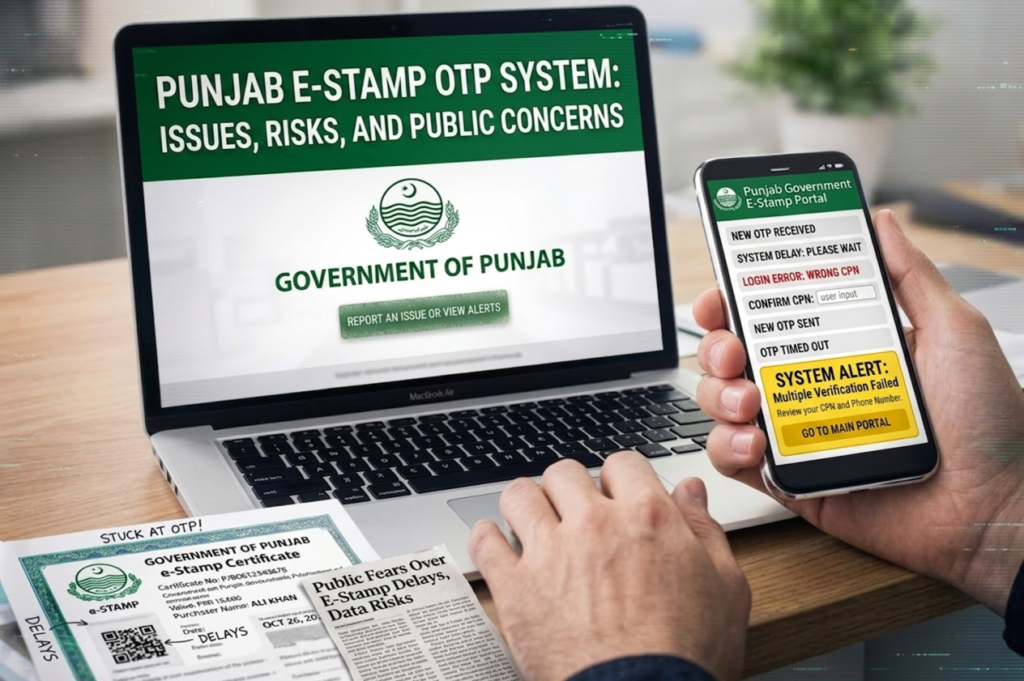
Punjab has accelerated its digital transformation in legal and property systems, and the e-Stamp OTP system plays a central role in this shift. Authorities introduced this system to improve transparency and align processes with evolving Cybercrime Law standards that aim to reduce fraud and unauthorized transactions.
The system promises efficiency and security, but many users report serious concerns. Citizens, lawyers, and overseas Pakistanis frequently face OTP failures, technical glitches, and access barriers. This article explains how the system works, identifies key issues, and evaluates the risks and public concerns surrounding it.
What Is the Punjab E-Stamp OTP System?
The Punjab e-Stamp system enables users to generate stamp papers digitally instead of relying on physical documents.
How OTP-Based Verification Works
The system follows a simple process:
- The user enters CNIC and transaction details
- The system requires a mobile number registered with the CNIC
- The system sends an OTP via SMS
- The user enters the OTP to verify identity
- The system generates the e-Stamp
This process ensures that only verified individuals complete transactions.
Purpose of Digital Stamp Authentication
Authorities designed the system to:
- Prevent fake stamp papers
- Improve transparency in property dealings
- Maintain centralized digital records
- Support efficient legal documentation
Key Issues Reported by Users
Users consistently report multiple challenges that affect usability and reliability.
OTP Delivery Failures and Delays
Many users experience:
- Delayed OTP messages
- No OTP delivery in weak network areas
- SMS gateway disruptions
These issues delay urgent legal and property transactions.
Mobile Number Dependency Challenges
The system creates barriers by requiring a registered SIM:
- Many rural women do not own SIMs in their names
- Students and young users cannot register SIMs
- Overseas Pakistanis often lack local mobile numbers
This requirement excludes many legitimate users.
System Downtime and Technical Glitches
Users frequently encounter:
- Website crashes
- Server downtime
- Session expiration during verification
These technical problems disrupt legal workflows and court-related processes.
Security Risks and Vulnerabilities
The OTP system improves security but still exposes users to risks.
Risk of SIM Swap and OTP Interception
Attackers can exploit the system through:
- SIM swap fraud
- Unauthorized SIM access
- OTP interception
These attacks can compromise sensitive transactions.
Data Privacy Concerns in Digital Verification
The system collects personal data such as CNIC numbers and phone details. Weak data protection can expose users to breaches or misuse.
Phishing and Social Engineering Threats
Scammers actively target OTP systems:
- They send fake OTP requests
- They impersonate official platforms
- They trick users into sharing verification codes
These tactics can result in financial or legal harm.
Public Concerns and User Experience Issues
Accessibility Barriers for Rural Users
Many users struggle because they lack:
- Reliable internet access
- Smartphones
- Digital literacy
These limitations reduce system usability.
Lack of Clear Guidance or Support
Users often face:
- Unclear instructions
- Limited help resources
- No immediate assistance
This lack of support increases frustration.
Trust Deficit in Digital Systems
Repeated issues reduce user confidence:
- Many users prefer manual processes
- People fear system errors
- Users question document validity
Impact on Property Transactions and Legal Processes
Delays in Property Registration
OTP failures and system errors slow down property transfers and legal filings.
Increased Dependency on Middlemen
Many users rely on agents to navigate the system, which increases costs and reduces transparency.
Legal Risks from Failed Verification
Incomplete OTP verification can:
- Delay documentation
- Create legal disputes
- Affect transaction validity
Government Perspective and Intended Benefits
Authorities introduced the system to improve governance and security.
Enhanced Security and Fraud Prevention
The OTP process verifies identity and reduces unauthorized transactions.
Improved Efficiency and Record Keeping
The system:
- Stores records digitally
- Reduces paperwork
- Speeds up documentation
Alignment with Digital Governance Goals
The initiative supports:
- Transparent governance
- Digital transformation
- Revenue protection
Possible Solutions and Improvements
Authorities can improve the system through practical measures.
Multi-Factor Authentication Alternatives
They can introduce:
- Biometric verification
- Email-based authentication
- CNIC-based validation
Improved SMS Infrastructure
They should:
- Upgrade SMS gateways
- Add backup OTP delivery systems
User Education and Awareness
They can:
- Launch awareness campaigns
- Provide step-by-step guides
Dedicated Support Systems
They should establish:
- Help desks in courts
- Real-time customer support
Conclusion
The Punjab e-Stamp OTP system represents a major step toward digital governance, but it still faces significant technical, security, and accessibility challenges. Authorities must address these issues to build trust and improve usability.
If policymakers align the system more closely with modern Cybercrime Law practices and user-centric design, they can create a secure, inclusive, and efficient platform that benefits all citizens.
FAQs
Why do I not receive OTP in the e-Stamp system?
Network issues, SIM registration problems, or SMS delays can prevent OTP delivery.
Is the OTP system secure?
The system improves security but still requires strong safeguards against fraud.
What should I do if OTP verification fails?
You should retry after checking your network or contact support services.
Can overseas Pakistanis use the system easily?
They often face difficulties due to the local SIM requirement.
Are there alternatives to OTP verification?
Authorities may introduce biometric or multi-factor authentication in the future.
This article is general information about the law in Pakistan, not legal advice for your situation.